
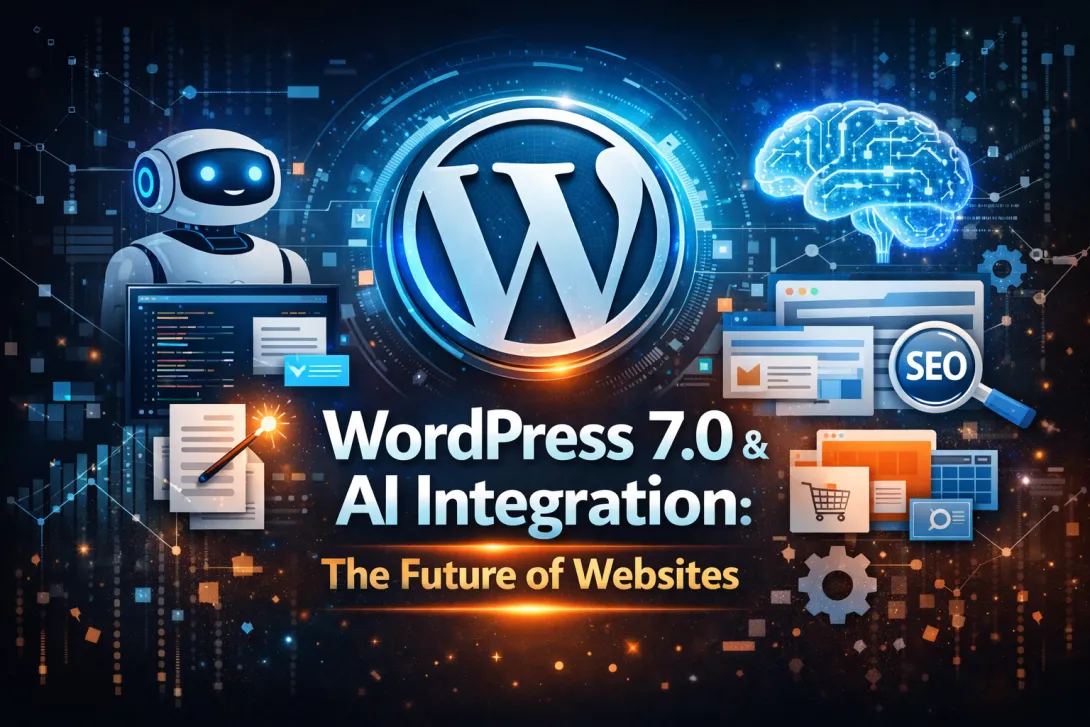
Artificial Intelligence is no longer just a plugin add-on in WordPress , it is becoming part of the platform’s foundation. With the upcoming release of WordPress 7.0, the world’s most popular content management system is taking a major step toward native AI integration.
For developers, agencies, bloggers, and business owners, this shift changes how websites are built, optimized, and managed.
In this article, we break down what WordPress 7.0 introduces in terms of AI, how it works behind the scenes, and why it matters for the future of web development.
The Evolution of AI in WordPress
Until recently, artificial intelligence in WordPress depended almost entirely on third-party plugins. Tools connected to APIs like OpenAI allowed content generation, chatbots, SEO optimization, and automation features.
While powerful, these integrations were external layers and not part of WordPress core. WordPress 7.0 changes that direction!
Instead of AI being an optional add-on, the platform is introducing standardized infrastructure to support AI at the core level. This means better performance, stronger compatibility between plugins, and a unified way for AI tools to interact with your site.
Native AI Client Layer (A Standardized AI Framework)
One of the biggest architectural updates in WordPress 7.0 is the introduction of a native AI client layer.
What is it?
It’s a built-in framework that allows themes and plugins to connect to AI models in a consistent and secure way. Instead of every developer writing custom integrations, WordPress now provides:
- A unified method to connect to AI providers
- Centralized configuration for API keys
- Standardized request handling
- Improved security and permissions control
Why This Matters for Developers
For WordPress developers, this reduces repetitive integration work and improves maintainability. Instead of reinventing the wheel for each project, you can leverage WordPress’ AI infrastructure to:
- Generate dynamic content
- Automate workflows
- Build AI-powered blocks
- Create intelligent user experiences
This also encourages ecosystem growth because plugin authors can now build AI tools that work seamlessly together.
AI Agent Support (WordPress Meets Autonomous Workflows)
Another major innovation in WordPress 7.0 is AI agent compatibility.
AI agents are systems that can perform tasks autonomously, for example:
- Updating outdated blog posts
- Optimizing metadata for SEO
- Managing product descriptions
- Moderating comments
- Analyzing user engagement
With new adapter layers in WordPress 7.0, external AI tools can securely interact with site content and capabilities.
This opens doors for:
- Automated content refresh strategies
- Intelligent WooCommerce management
- Advanced analytics-driven decision making
- Personalized content delivery
For agencies managing multiple client sites, this is a massive productivity upgrade.
The Abilities API (Making WordPress “Understandable” to AI)
A key foundational improvement supporting AI integration is the Abilities API.
This API allows WordPress to expose specific functions and capabilities in a structured way that AI systems can interpret.
In simple terms:
WordPress can now “describe” what it can do to AI systems.
For example:
- What blocks are available
- What actions can be performed
- What content types exist
- What permissions apply
This structured discoverability makes AI interactions more reliable, secure, and context-aware.
Instead of guessing how your site works, AI tools can now understand it systematically.
How WordPress 7.0 Impacts SEO
AI integration at the core level has direct implications for search engine optimization.
Smarter Content Workflows
AI agents can:
- Identify underperforming content
- Suggest improvements
- Optimize headings and structure
- Improve readability
Structured Data Optimization
With standardized AI frameworks, developers can build tools that automatically enhance:
- Schema markup
- Meta descriptions
- Internal linking
- Keyword clustering
Content Velocity
Businesses can produce high-quality, optimized content faster while maintaining editorial control.
This gives WordPress users a competitive advantage in increasingly AI-driven search environments.
What This Means for the Future of Web Development
WordPress 7.0 signals a larger transformation:
Websites are evolving from static publishing platforms into intelligent digital systems.
We are moving toward:
- Self-optimizing content ecosystems
- Automated website maintenance
- Predictive user experience enhancements
- AI-assisted development environments
For developers, this means new opportunities:
- Building AI-native themes
- Creating automation-driven plugins
- Offering AI-powered maintenance services
- Developing custom AI workflows for enterprise clients
For businesses, it means:
- Lower operational costs
- Faster content production
- Better personalization
- Improved performance analytics
Should You Prepare for WordPress 7.0?
If you are a:
- WordPress developer
- Digital agency
- SEO specialist
- E-commerce store owner
- Content publisher
Then yes — now is the time to start exploring AI infrastructure within WordPress.
Begin by:
- Testing AI integrations in staging environments
- Evaluating workflow automation opportunities
- Reviewing security implications
- Learning how AI APIs function within WordPress architecture
Early adopters will gain a strong competitive edge.
Final Thoughts: WordPress Is Becoming an AI-Native CMS
WordPress has always adapted to technological shifts — from blogging to full-site editing, from classic themes to block architecture.
With WordPress 7.0, the platform is making one of its most strategic moves yet: embracing AI at the structural level.
The future of WordPress is not just about publishing content , it’s about intelligent systems that assist, optimize, and evolve alongside your business.
And this is only the beginning!