
From Fragmented Data to AI-Ready: How KWCA is Building a Foundation for Intelligent Nonprofit Operations
For many nonprofits, the conversation around AI feels premature.
There’s growing pressure—from donors, partners, and even internal teams—to become more data-driven, more predictive, and more responsive. AI is often positioned as the next frontier. But beneath that ambition lies a more fundamental question: is the data ready?
In most cases, the answer is no.
Data is scattered across spreadsheets, siloed systems, and disconnected teams. Reporting is manual. Insights are reactive. And while the vision for AI exists, the foundation to support it does not.
This is where the journey truly begins—not with AI tools, but with building a unified, reliable data platform.
This was the starting point for the Kenya Wildlife Conservancies Association (KWCA).
The Reality: AI Ambition Meets Operational Complexity
KWCA operates in a highly coordinated environment, working across multiple conservancies, programmes, and stakeholders. Their impact depends on their ability to see what’s happening across regions, align initiatives, and report effectively.
But like many nonprofits, their systems evolved organically.
Conservancy data lived in one place. Programme tracking in another. Annual workplans in separate files. Each dataset was valuable—but disconnected.
This created a familiar set of challenges:
- No single, trusted view of organizational data
- Time-intensive reporting processes
- Limited ability to identify patterns or trends
- Difficulty aligning execution (workplans) with strategy (programmes)
In this state, even the most advanced AI tools would struggle to deliver meaningful value. Without structured and connected data, intelligence has nothing to build on.
The Shift: Building the Data Foundation First
Rather than jumping straight into advanced analytics or AI, the focus shifted to something more fundamental: unifying the data.
Using Microsoft Power Platform, we worked with KWCA to design a centralized system that connects Conservancies, Programmes, and Annual Workplans into a single application built on Power Apps.
The approach was intentional:
- Define a clear data structure aligned to how KWCA operates
- Establish relationships between key entities
- Create a single source of truth accessible across teams
- Ensure the system is scalable, flexible, and cost-effective
Instead of forcing KWCA into a rigid system, the solution was shaped around their reality.
A Reflection of Their Work: Conservancies and Connected Data
Interestingly, the solution mirrored KWCA’s own model in the field.
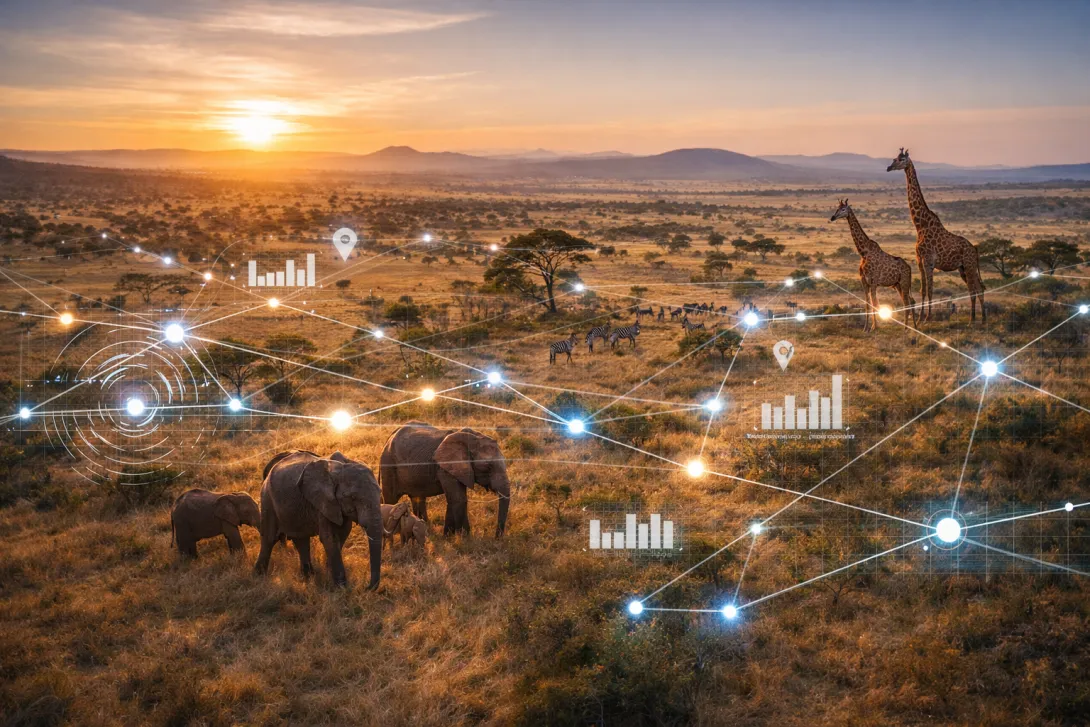
KWCA brings together independent conservancies into a coordinated network—preserving their individuality while enabling collective impact. The system does the same for their data.
Before, each dataset operated like an isolated conservancy—useful, but limited. Now, each remains distinct, but connected within a shared structure.
This shift—from isolation to coordination—is what unlocks visibility, alignment, and ultimately, intelligence.
Why This Matters: The Bridge to AI
With a unified data platform in place, something important changes.
Data is no longer just stored—it becomes usable.
For KWCA, this creates a pathway toward becoming an AI-ready organization:
- Data is structured and consistent
- Relationships between datasets are clearly defined
- Historical information is accessible and reliable
- Insights can be generated across the entire organization
This is the environment where AI can begin to add value.
Not as a standalone solution, but as a natural next step.
From here, possibilities start to emerge:
- Identifying trends across conservancies and programmes
- Predicting resource needs based on past workplans
- Enhancing reporting with automated insights
- Supporting decision-making with data-driven recommendations
None of this requires a leap—it builds on a solid foundation.
The Impact: Immediate Gains, Future Readiness
Even before introducing AI, KWCA has already experienced tangible improvements:
- Clarity Across the Organization
A unified view of conservancies, programmes, and workplans enables better planning and alignment. - Efficiency in Reporting
Manual consolidation has been replaced with structured, reliable data. - Stronger Coordination
Teams now operate within a shared system, reducing silos and improving collaboration. - Data Integrity
Information is captured once and used across multiple contexts.
But beyond these immediate gains, the more significant outcome is readiness.
KWCA is no longer held back by fragmented data. They are positioned to evolve—at their own pace—into more advanced capabilities, including AI.
A Lesson for Nonprofits: Start Where It Matters
There’s a common misconception that becoming an AI-driven organization requires complex tools or large investments.
In reality, it starts much simpler.
It starts with bringing your data together.
KWCA’s journey shows that by focusing on unification first, nonprofits can solve today’s operational challenges while quietly preparing for tomorrow’s opportunities.
AI is not the first step. It’s the outcome of getting the fundamentals right.
Let’s Build Your AI Foundation
If your organization is exploring AI—or simply trying to make better use of its data—the first step is understanding what foundation you already have.
At Sibasi, we help nonprofits design and implement unified data platforms using tools available through Microsoft’s nonprofit programs. The goal is not just to digitize, but to create systems that are scalable, sustainable, and ready for what comes next.
Let’s start by building the foundation your data—and your future—depends on.
Reach out for a conversation or a quick assessment and take the first step toward becoming an AI-ready organization.